
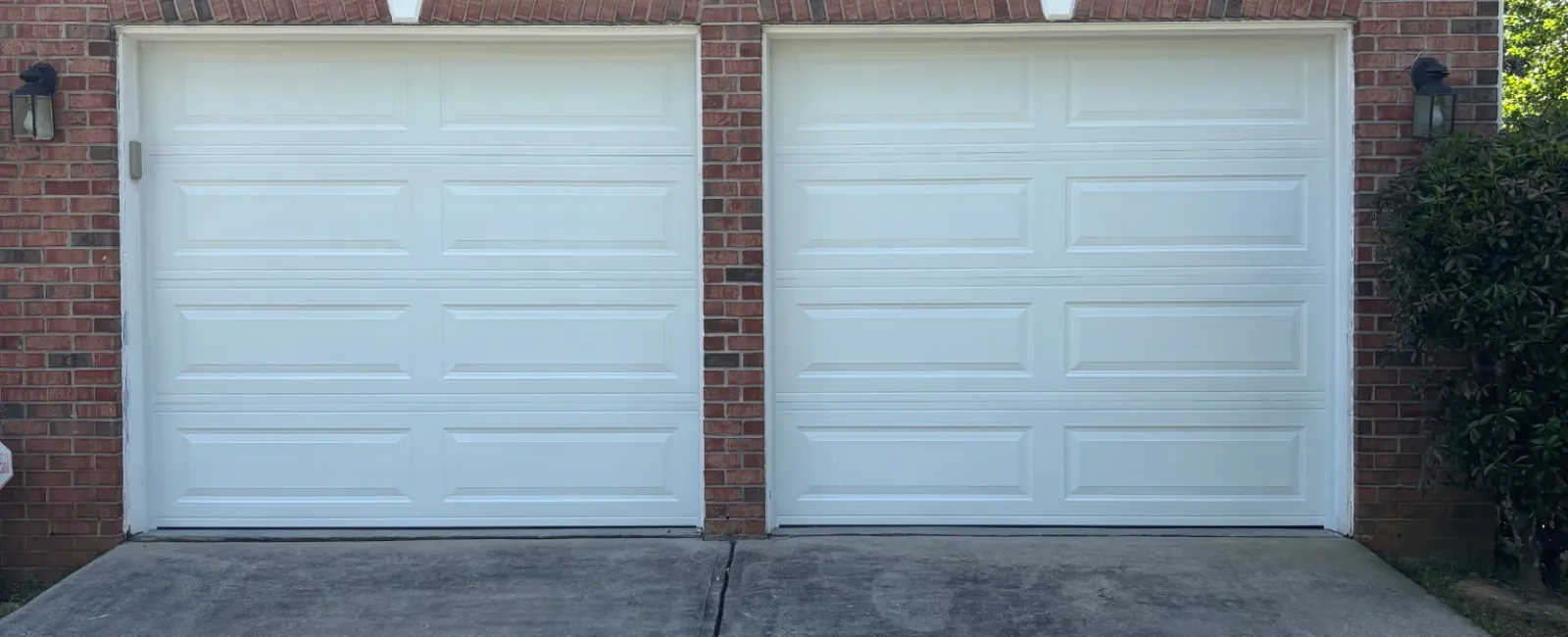
Choosing a new garage door is a significant investment that impacts your home's curb appeal, security, and energy efficiency. Because the garage often takes up a large portion of your home's facade, the material you choose serves as a focal point for your exterior design.
Why the right garage door material matters
The material determines how much maintenance you will perform, how well the door stands up to the Georgia climate, and how long the system lasts. Selecting the right material ensures your door remains functional and beautiful for decades.
Garage door material options
Understanding the advantages and drawbacks of these options will help you make a decision that aligns with your lifestyle and home architecture.
Steel Doors
Steel is the most popular choice for modern homeowners due to its versatility and value.
Pros
Steel is durable and requires very little maintenance. It is available in a massive range of colors and styles, from traditional panels to modern designs.
Cons
Steel can dent if struck by heavy objects. While newer models feature corrosion-resistant coatings, scratches must be touched up to prevent rust.
Wood Garage Doors
For many, nothing beats the timeless beauty of natural wood.
Pros
Wood provides a high-end look and natural insulation. Each door features unique grain patterns that can be stained or painted to match your home.
Cons
Wood requires regular sanding and refinishing to prevent rotting or warping. It is also typically the most expensive and heaviest option.
Composite Faux Wood
Composite uses a steel core covered with moisture-resistant fiberboard to mimic wood without the upkeep.
Pros
It offers the texture of real wood without the risk of rotting. These doors are lighter than solid wood and offer superior insulation.
Cons
While realistic, they lack the exact prestige of solid timber and can cost more than standard steel.
Fiberglass Garage Doors
Fiberglass consists of layers bonded to a steel frame, excelling in specific environments.
Pros
It is resistant to salt air and does not expand or contract with temperature changes.
Cons
In very cold climates, fiberglass can become brittle. The finish may also fade over time due to heavy sun exposure.
Aluminum Garage Doors
Aluminum is frequently used for modern, full-view glass doors.
Pros
Aluminum is naturally resistant to rust, making it ideal for humid environments. Its light weight puts less strain on the opener.
Cons
It is more prone to denting than steel and has poor natural insulation unless manufactured with a thermal break.
Vinyl
Vinyl doors are often considered "kid-proof" because of their extreme resilience.
Pros
Vinyl is nearly impossible to dent. The color goes through the material, making scratches invisible.
Cons
Color and style choices are limited, and vinyl is difficult to paint.
Glass
Glass doors are a staple of contemporary architecture.
Pros
They allow natural light into the garage and provide a sleek aesthetic.
Cons
Glass offers minimal privacy and insulation and requires frequent cleaning.
Struggling to choose between garage door materials? Contact Balanced Garage Doors!
At Balanced Garage Doors, we help North Georgia homeowners find the perfect fit. Whether you need durable steel or luxury wood, our technicians provide professional installation with no service fees.
Contact Balanced Garage Doors today to schedule your free estimate!
